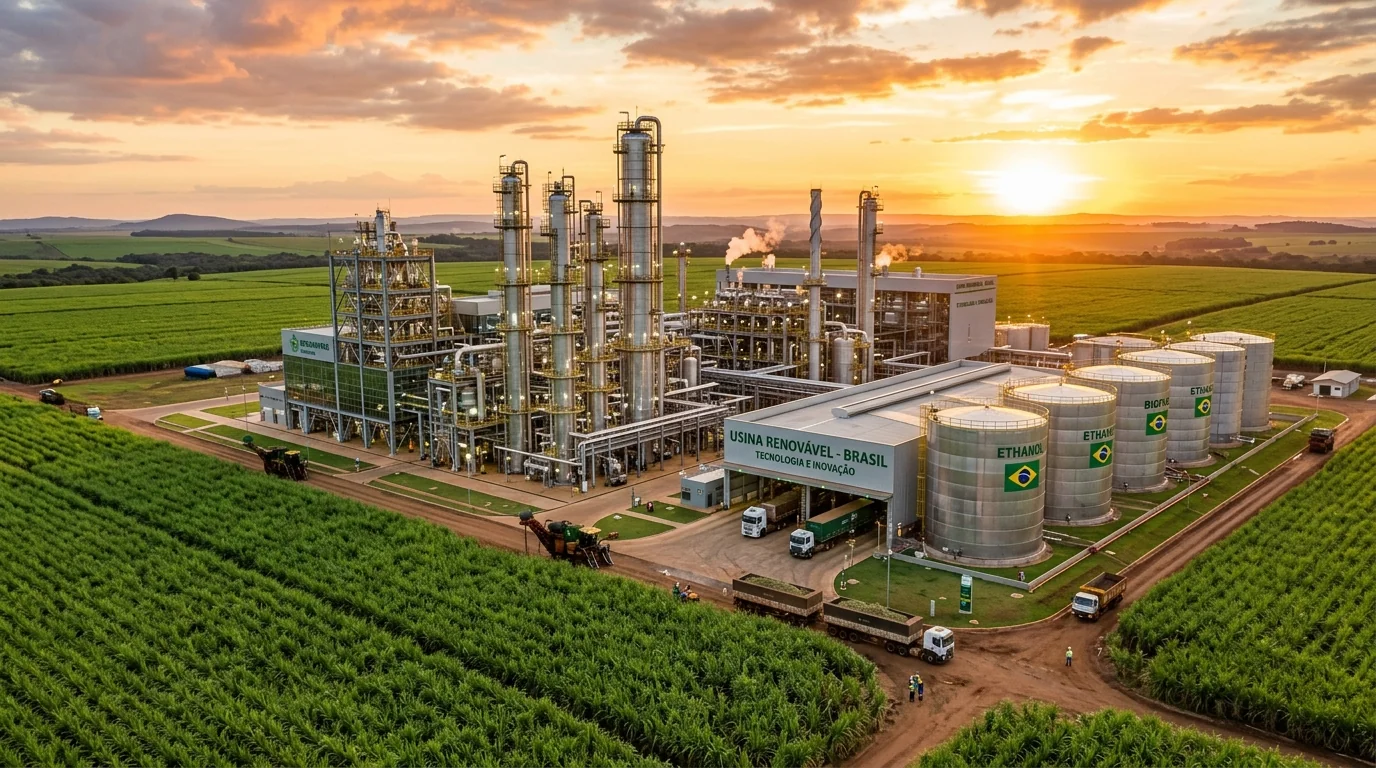
emerges as an undisputed leader in ethanol production, solidifying its
position as a powerhouse in the global agribusiness. In this context, we
highlight trends, competitive advantages, and future projections for
ethanol, examining its influence on job opportunities and prosperity for
local communities.
Market Trends: The Rise of Brazilian Ethanol
Ethanol production in Brazil continues to shape global trends, driven by
key factors. The increasing demand for clean and renewable energy is
a driving force behind this ascent. Brazil's expertise in efficiently
cultivating sugarcane, a crucial raw material for biofuel production,
cements the country's role as a protagonist in the international ethanol
market.
Moreover, government policies incentivizing the use of biofuels and the
quest for sustainable alternatives in the transportation sector contribute
to a promising scenario. The diversification of ethanol use, not only as
a fuel but also as a raw material for chemicals and plastics, adds an
additional layer of versatility to the sector.
Competitive Advantages: Brazil at the Forefront of Sustainability
The competitive advantages of Brazilian ethanol are undeniable.
Large-scale production, coupled with ideal climatic conditions, gives
Brazil a strategic position. Sugarcane not only offers abundant raw
material but also stands out for its high energy efficiency and
significant reduction in carbon emissions compared to fossil fuels.
Environmental sustainability is a crucial differentiator. The reduction of
greenhouse gas emissions throughout the ethanol's life cycle, from
cultivation to combustion, places Brazil at the forefront of the transition
to a greener energy matrix.
Global Projections: The Promising Future of the Biofuel
Projections for the future of ethanol are promising on a global scale.
With more countries committing to reducing their carbon footprints, the
demand for biofuels, especially ethanol, is destined to grow. The
internationalization of Brazilian expertise in ethanol production opens
doors for strategic partnerships and contributes to the dissemination of
sustainable practices in agribusiness.
Impact on Employment and Local Prosperity: The Ethanol Cluster
in Action
The ethanol production sector is not just a driving force in the national
economy but also a generator of job opportunities throughout its
production chain. From vast sugarcane plantations to processing units
and distribution, the ethanol industry provides direct and indirect jobs,
fostering local economic growth.
Communities around ethanol plants benefit not only economically but
also socially, as corporate social responsibility programs become an
integral part of operations. Investments in education, health, and local
infrastructure promote a virtuous cycle of sustainable development.
Conclusion: Brazil at the Forefront of the Sustainable Energy
Revolution
In conclusion, Brazil not only leads global ethanol production but also
serves as a model for a sustainable transition in agribusiness and the
world's energy matrix. Trends, competitive advantages, and future
projections for ethanol converge into a narrative of innovation,
environmental commitment, and economic development. Brazilian
ethanol is not just a biofuel; it is a key player in building a greener and
more prosperous future for local communities and the world.
To learn more about biofuels and other clean energy investment
opportunities, contact our experts at www.venkocorp.com
Investment in the
Manufacturing Industry: A
Promising Strategy for the
Future.