
Regulatory Notice (Zero-Custody): This content is strictly informative and educational and does not constitute legal or environmental counsel. Venko Total Group operates solely as a neutral technology platform and immutable ledger; it provides no direct banking custody and does not substitute statutory public enforcement authorities.
The challenge: proving TAC environmental compliance without relying on sporadic reports
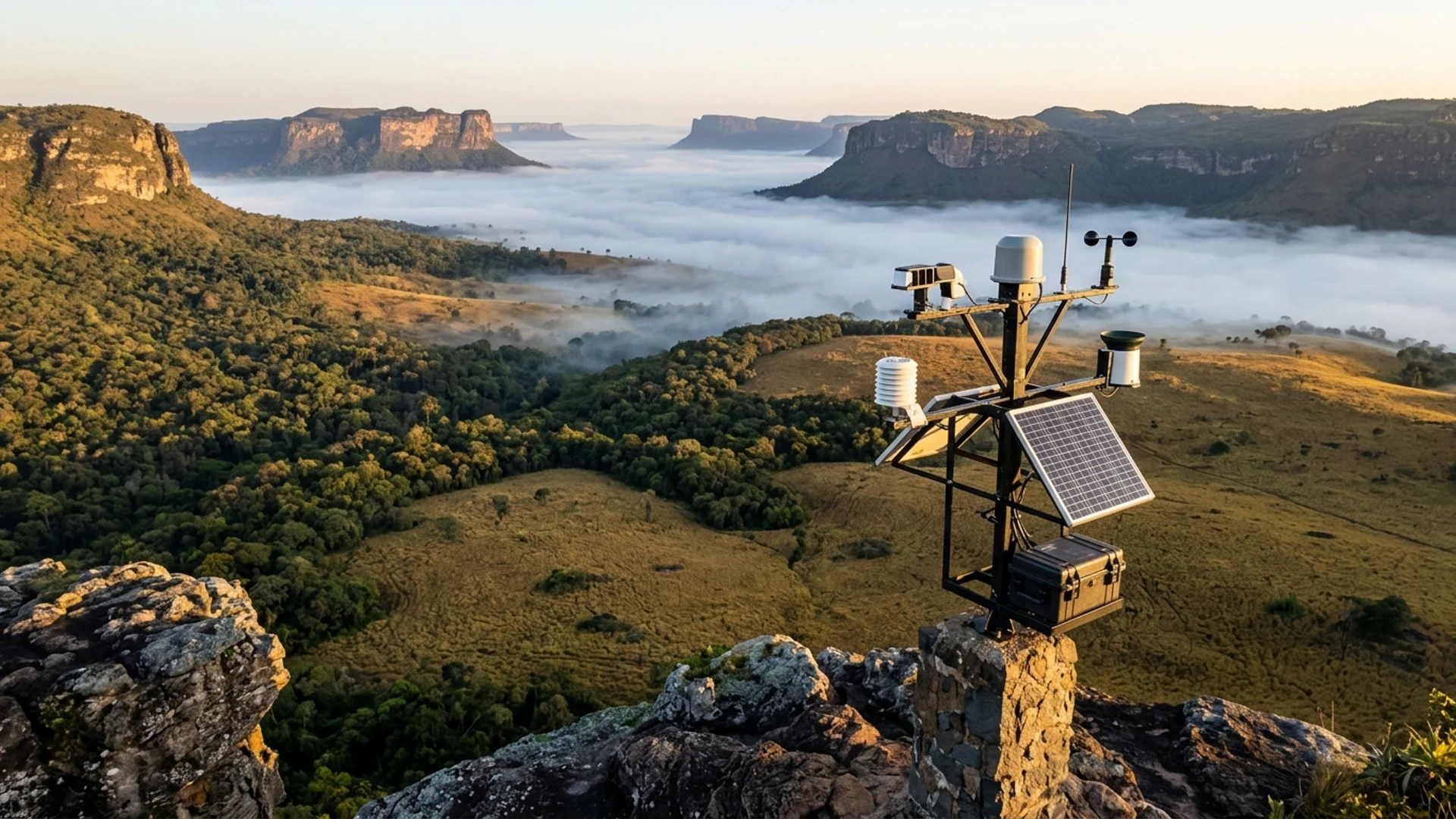
Managing and settling environmental remediation obligations entered into with public authorities face a historical verification bottleneck: reliance on paper filings and infrequent on-site visits. In ecosystems characterized by intense rainfall seasonality, such as the Brazilian Cerrado savanna, sporadic inspections conducted at the end of the dry season often register biological dormancy as seedling mortality, whereas wet-season visits may misinterpret invasive pasture grasses as established native canopy.
This information asymmetry generates structural uncertainty for obligated companies—which keep financial guarantees locked in bank deposits for years without closing certainty—and for public authorities lacking continuous, tamper-evident audit trails of vegetative trajectories.
The TAC as an extrajudicial executive title (Law 7,347/1985, art. 5, § 6)
Under the Brazilian legal framework, the Conduct Adjustment Term (TAC) is formally grounded in art. 5, § 6 of Federal Law 7,347/1985 (Public Civil Action Law). This statute authorizes legitimized public bodies—specifically the Federal Public Prosecutor’s Office (MPF), State Public Prosecutors (MPE), and environmental enforcement agencies (IBAMA and ICMBio)—to take binding compliance commitments possessing the force of an extrajudicial executive title.
Any unexcused delay or breach in the silvicultural milestones stipulated in the technical annex of a TAC triggers summary execution of daily procedural fines (astreintes) and enforcement against pledged collateral. Consequently, producing verifiable, tamper-evident technical proof is indispensable for reducing legal execution risk.
The MRV protocol: measurement, reporting, and continuous verification in fiduciary compliance
To transcend static reports and establish immutable traceability, contemporary environmental governance deploys the international standard of Measurement, Reporting and Verification (MRV):
1. Measurement: Continuous collection of bio-physical data via orbital sensors, seasonal multispectral drone surveys, and permanent on-ground sampling plots georeferenced with GNSS RTK;
2. Reporting: Aggregation of spatial time series into structured periodic dossiers bearing cryptographic integrity hashes and professional certified responsibility (ART/CREA);
3. Verification: Independent collegiate audit (maker-checker) validating physical progress against contract milestones before funds are released.
Sentinel-2 constellation and spectral vegetation indices (NDVI and NDRE)
Orbital telemetry relies upon the European Space Agency’s (ESA) Sentinel-2 constellation under the Copernicus Programme. Operating dual MultiSpectral Instruments (MSI), the constellation delivers a systematic 5-day revisit cycle and 10-meter spatial resolution across visible and near-infrared spectral bands:
- NDVI (Normalized Difference Vegetation Index): Measures the ratio between chlorophyll absorption in the red band (Band 4) and cellular reflectance in the near-infrared band (Band 8), quantifying photosynthetically active biomass;
- NDRE (Normalized Difference Red Edge Index): Leverages narrow Red Edge bands (Bands 5, 6, and 7), assessing foliar nitrogen and chlorophyll content in denser canopies without the premature spectral saturation typical of NDVI.
Dated baseline and temporal biomass trajectory analysis
Reliable remote sensing avoids single-image assessments, relying instead on multitemporal trajectory modeling. A rigorous geospatial baseline is fixed prior to silvicultural intervention. Throughout active planting or assisted natural regeneration, the engine compares evolving spectral trajectories against expected growth profiles for local savannas, filtering short-term meteorological anomalies and cloud artifacts.
Restoration in the Cerrado: RL and APP recovery under CONAMA Resolution 429/2011
Native ecological restoration in the Cerrado—encompassing both Legal Reserves (RL) under Federal Law 12,651/2012 (Forest Code) and Permanent Preservation Areas (APP)—must observe the statutory methodologies codified in CONAMA Resolution 429/2011:
- Assisted natural regeneration of native savanna species;
- Enrichment planting with native climax and drought-adapted pioneer species;
- Direct seeding (seed muvuca) and mechanized planting;
- Environmental perimeter fencing and firebreak management.
Early detection of vegetative stress, water deficit, and regeneration deviations
High-frequency orbital capture (every 5 days) allows early detection of silvicultural stress. Abrupt drops in NDRE signal leafcutter ant defoliation (Atta spp.) or root-zone water stress weeks before canopy dieback occurs, enabling restoration contractors to intervene promptly with targeted re-planting or biological pest management.
Fiduciary integration: environmental escrow and guarantees linked to spectral oracles
To balance capital protection and operational performance, project disbursements to silvicultural contractors are structured through segregated escrow accounts managed by commercial banks authorized by the Central Bank of Brazil (BACEN). Tranche releases are strictly conditioned upon collegiate fiduciary verification of spectral evidence reconciled with field engineering certificates.
Contractors receive payment in direct proportion to verifiable vegetative success, while obligated corporations preserve collateral protection until environmental objectives are confirmed.
Methodological boundaries, cloud coverage, and the non-delegable role of human experts
Technical safeguards must be maintained regarding orbital remote sensing:
1. Cloud Cover Interference: During the tropical rainy season, persistent cloud cover may obstruct optical imagery, requiring Sen2Cor atmospheric correction or radar cross-referencing (Sentinel-1 SAR) and low-altitude drone flights;
2. Spectral Mimicry: Invasive pasture grasses (Brachiaria/Urochloa) can yield elevated NDVI readings; separating alien grasses from native saplings requires Red Edge analysis (NDRE) and physical ground-truthing;
3. Incompetence for Public Discharge: Private MRV dossiers and escrow releases represent private contractual mechanics. Final legal discharge of a TAC belongs exclusively to the Public Prosecutor’s Office and competent environmental protection authorities.
Institutional glossary of telemetry and ecological restoration
Frequently Asked Questions (FAQ)
Does satellite telemetry replace on-site expert field inspection in a TAC?
No. Sentinel-2 orbital telemetry provides continuous objective surveillance, but formal legal-technical validation requires on-site inspection by a licensed forestry engineer registered with CREA issuing a certified report with professional responsibility (ART). Telemetry guides and optimizes ground inspection, but never replaces ground truth.
Does escrow disbursement mean the TAC has been legally settled?
No. The release of funds from a private escrow account compensates silvicultural work agreed between commercial parties. Formal legal discharge of the TAC belongs exclusively to the public authorities and prosecutors who executed the commitment.
How does satellite imagery distinguish exotic pasture grass from native saplings?
The system utilizes multitemporal seasonal analysis and combined NDVI/NDRE ratios: alien pasture grasses exhibit sudden greening followed by complete desiccation during the winter dry spell, whereas established native woody plants sustain Red Edge reflectance throughout seasonal transitions.
Practical roadmap of the technological restoration pipeline
Telemetric MRV Pipeline & Evidence-Linked Tranche Release in TACs
5-step operational workflow strictly separating duties among the Obligated Party (TAC), Registered Forestry Engineer, Orbital Telemetry Audit (Sentinel-2), and Regulated Escrow Bank
Operational governance enforces an uncompromising fiduciary barrier: multitemporal orbital series (Sentinel-2 NDVI/NDRE), on-site inspection reports with certified professional responsibility (ART/CREA), and silvicultural metrics serve as audited evidentiary inputs under maker-checker dual controls. They never constitute automatic bank debits or legal discharge of the TAC before Public Authorities. Fund release is privately governed and settled by the partner commercial bank (BACEN regulated). Final assessment and discharge of the TAC belong exclusively to the Public Prosecutor’s Office and authorized environmental enforcement agencies (Federal Law 7,347/1985, art. 5, § 6).
- 01Topography & Baseline
Dated Baseline & Geospatial Demarcation (CAR/GNSS)
Topography & BaselinePolygonal perimeter demarcation via CAR/SIGEF cadastral registries, installation of permanent sampling plots georeferenced with GNSS RTK, and baseline spectral profiling pursuant to CONAMA Resolution 429/2011.
- 02Sentinel-2 & Drones
Orbital Multitemporal Telemetry & Drone Auditing (MRV)
Sentinel-2 & DronesSystematic 5-day revisit acquisition of Sentinel-2 multispectral imagery (visible, Red Edge, NDVI, and NDRE at 10m/20m) coupled with seasonal UAV multispectral surveys for early detection of seedling mortality and invasive grasses.
- 03Forestry Audit (CREA)
Field Verification & Certified Forestry Inspection Report
Forestry Audit (CREA)On-site bio-physical sampling in permanent plots (survival rate, native regenerative density, and root collar diameter) by a licensed forestry engineer with certified technical responsibility (ART/CREA).
- 04Dual Review Governance
Evidentiary Dossier & Dual Fiduciary Review (Maker-Checker)
Dual Review GovernanceCross-validation of spectral trajectories against silvicultural contract milestones, SHA-256 cryptographic hashing of field reports and vendor invoices, independent dual-custody verification, and release instruction issuance.
- 05Escrow Bank (BACEN)
Private Banking Settlement (Regulated Escrow Account)
Escrow Bank (BACEN)Transmission of the verified administrative instruction to the BACEN-authorized escrow bank to debit the dedicated project account and execute wire transfers directly to silvicultural contractors, preserving an immutable ledger trail.
FIDUCIARY BARRIER: No autonomous bank debits or fund releases. Technical attestations and telemetry trails serve strictly as verifiable evidentiary inputs; they never constitute direct payment orders or legal discharge of the TAC, which remains the non-delegable prerogative of the Public Prosecutor and environmental authorities.
If spectral vegetation indices detect abnormal drought stress, severe leafcutter ant infestation, or seedling survival below contractual thresholds, governance suspends full disbursement and triggers a 5% to 15% precautionary escrow holdback until remedial silviculture is completed.
Regulatory Notice: Venko Total Group operates solely as a neutral technology platform coordinating operational evidence and audit trails. Venko does not hold client funds or provide banking custody (BACEN). Silvicultural opinions belong exclusively to CREA-licensed professionals, and formal TAC compliance recognition is the statutory prerogative of public authorities under Law 7,347/1985.
1. Perimeter surveying and property title integration in CAR/SIGEF geospatial registries;
2. Establishing a dated spectral baseline using historical Sentinel-2 data prior to intervention;
3. Executing silvicultural interventions (soil conditioning, seeding, and planting under CONAMA 429/2011);
4. Multitemporal monitoring every 5 days with automated vegetative deviation alerts;
5. Certified on-site inspection across permanent sampling plots with professional registration (ART/CREA);
6. Collegiate fiduciary verification (Maker-Checker) authorizing tranche disbursement from project escrow;
7. Submitting the audited technical evidence dossier to public prosecutors and environmental authorities.
Regulatory Notice (Zero-Custody): This content is strictly informative and educational and does not constitute legal or environmental counsel. Consult specialized advisors prior to structuring or managing statutory environmental commitments.
Intelligence Report Conclusions & Release Governance
- •Full Regulatory Compliance: Complete alignment with Federal Procurement Law 14,133/2021, Law 13,303/2016, and federal audit standards (CGU/TCU).
- •Canonical Segregation & Zero-Custody: Strict boundary between analytical evidence coordination and regulated banking custody.
- •Immutable Cryptographic Integrity: Audited envelope with SHA-256 canonical digest and full traceability via RFC 8785.
- •Fail-Closed Shielding: Operation strictly constrained in production environments with full quorum of validated gates.